
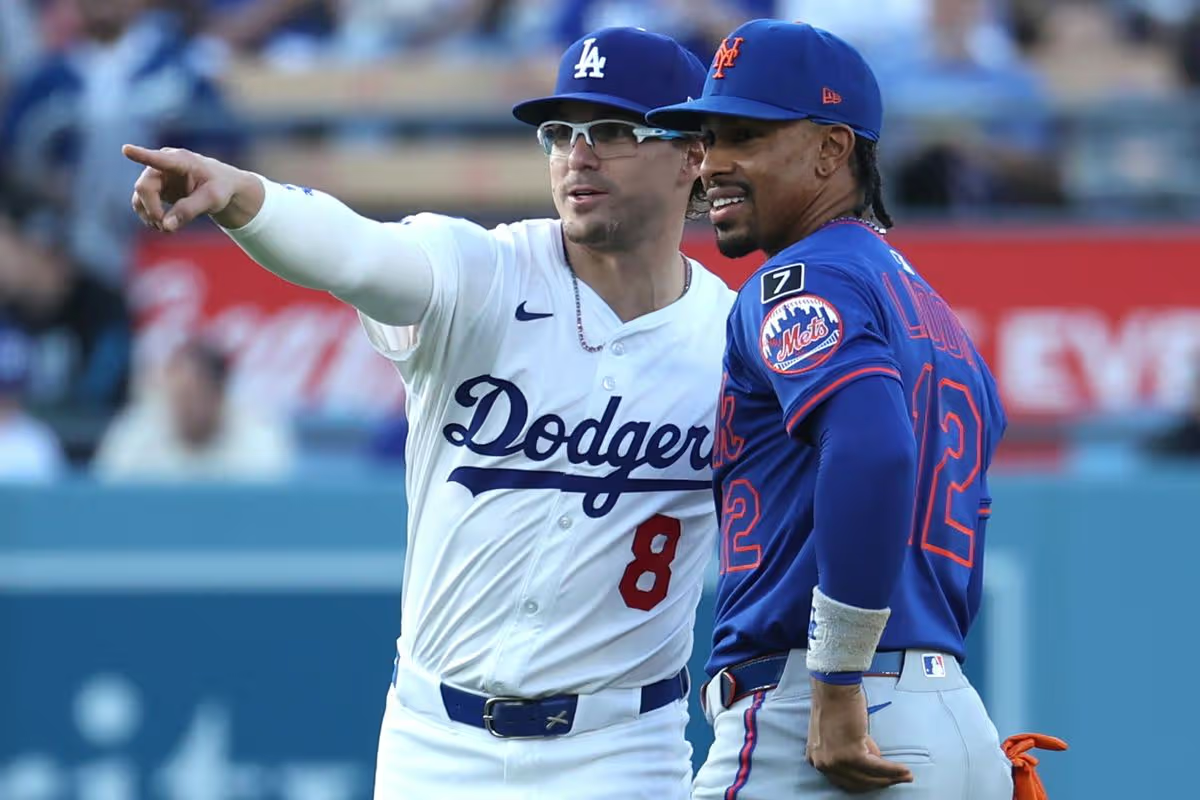
Imagine two teams stepping onto the field at Dodger Stadium with a combined payroll that tops a billion dollars when you factor in luxury taxes. That’s exactly what happened this week when the New York Mets rolled into Los Angeles for a three-game set against the defending back-to-back World Series champion Dodgers. It wasn’t just another interleague showdown—it shattered records as the priciest series in MLB history. The numbers are eye-watering, the stakes feel massive, and the implications stretch far beyond the diamond.
What Makes the Dodgers-Mets Series the Most Expensive in MLB History?
The title belongs to the 2026 Dodgers-Mets series because of the jaw-dropping combined Competitive Balance Tax payroll exceeding $796 million, plus an additional $290 million in estimated luxury tax bills, pushing the total tab north of $1.086 billion. No other matchup in league history has come close. It’s a clash of two financial titans who have rewritten the spending playbook in recent years, turning a regular-season series into a showcase of baseball’s evolving economics.
Breaking Down the Payroll Numbers
The Dodgers sit at the top of the MLB spending charts with a 2026 CBT payroll of $415.2 million and an estimated tax bill around $163.7 million. The Mets aren’t far behind at $381 million in CBT payroll and roughly $126.1 million in taxes. Together, they represent a level of investment that dwarfs entire small-market franchises. These figures come straight from Spotrac’s real-time tracking and highlight how both clubs have gone all-in on talent.
Dodgers’ Massive Investment
Los Angeles has built its roster through smart free-agent splashes and savvy extensions, with Shohei Ohtani’s deferred-heavy deal and Kyle Tucker’s massive AAV leading the charge. Their spending isn’t reckless—it’s backed by elite revenue streams from attendance, local TV deals, and global marketing. Yet the luxury tax hit keeps climbing, showing just how committed ownership is to sustained dominance.
Mets’ Big Spending Under Steve Cohen
Owner Steve Cohen has transformed the Mets from penny-pinchers into big-market aggressors since buying the team in 2020. Contracts like Juan Soto’s record-setting deal and Francisco Lindor’s extension reflect a willingness to absorb losses in pursuit of that elusive World Series title. The payroll jump from the Wilpon era is staggering, but results haven’t always matched the checkbook.
Key Superstars Driving the Payrolls
Both lineups feature megastar talent whose contracts alone could fund multiple teams. On the Dodgers side, Ohtani, Tucker, Yamamoto, and Glasnow anchor a star-studded group. The Mets counter with Soto, Lindor, and Bichette. These players don’t just command huge AAVs—they elevate ticket demand and national TV ratings every time they step between the lines.
Top High-AAV Players in the Series
- Shohei Ohtani (Dodgers): ~$46M CBT value despite low cash salary thanks to deferrals
- Kyle Tucker (Dodgers): $57.2M AAV, the largest in baseball
- Juan Soto (Mets): Record $765M contract with massive annual impact
- Bo Bichette (Mets): Multi-year deal adding big bat stability
The Luxury Tax Explained: Where the Real Money Goes
MLB’s Competitive Balance Tax kicks in above a $244 million threshold, with rates escalating for repeat offenders like these two clubs. The Dodgers and Mets both face 50% base rates plus surcharges up to 60% on higher overages. That money doesn’t vanish—it helps fund smaller-market teams through revenue sharing. Still, critics argue it’s more penalty than equalizer in practice.
How This Compares to Previous Expensive Series
Last year’s Dodgers-Mets meetings held the previous record at a combined $764 million in payroll (totaling about $1.025 billion with taxes). This 2026 series blows that away by over $60 million before taxes. Earlier high-water marks involved the Yankees or Red Sox, but never two clubs this loaded at the same time. The gap keeps widening as big-market spending accelerates.
Comparison Table: Most Expensive Series in Recent MLB History
| Series | Year | Combined CBT Payroll | Est. Total with Taxes | Record Holder? |
|---|---|---|---|---|
| Dodgers vs. Mets | 2026 | $796M | $1.086B | Current |
| Dodgers vs. Mets | 2025 | ~$764M | $1.025B | Previous |
| Yankees vs. Dodgers | 2024 | Lower (WS) | Not tracked same way | N/A |
| Mets solo peak | 2023 | $330M+ (single) | N/A | N/A |
On-Field Results vs. Off-Field Spending
Despite the billion-dollar price tag, the Dodgers swept the series and improved to 14-4 while the Mets dropped to 7-12 and extended a painful losing streak. It’s a classic reminder that money buys talent, but execution wins games. Fans watched stars like Ohtani and Soto battle it out, yet the outcome favored the better-coached, deeper squad.
Impact on MLB Parity and Small-Market Teams
This series shines a harsh light on the growing divide. The Dodgers’ payroll alone exceeds the bottom four teams combined. Small-market clubs like the Marlins or Guardians simply can’t compete dollar-for-dollar, forcing them to rely on drafting and development. Calls for a hard salary cap grow louder every offseason, especially as revenue gaps widen.
Fan Experience: Are Tickets Part of the Expense?
While the “expensive” label here refers to payroll, Dodgers games already rank among the priciest in the league for fans. Resale prices for big series like this can spike, with family-of-four costs easily topping $400 including parking and concessions. Mets fans traveling cross-country feel the sting too. Yet the atmosphere inside Dodger Stadium remains electric, making the splurge worthwhile for many.
Pros and Cons of Billion-Dollar Rosters
Pros:
- Elite talent raises the overall level of play and excitement
- Big spending drives league-wide revenue through star power
- Fans in large markets get competitive, entertaining baseball
Cons:
- Widens competitive imbalance for small-market teams
- Luxury taxes don’t fully level the playing field
- Risk of unsustainable losses even for wealthy owners
Real Stories from Fans and Insiders
I still remember sitting in the upper deck years ago when payrolls felt more balanced—$100 million bought you a contender. A buddy of mine who covers the Mets told me Cohen’s spending feels like “trying to buy happiness,” and the early 2026 struggles have tested that theory. Dodgers season-ticket holders I’ve chatted with love the star power but grumble about rising prices. These personal moments humanize the numbers.
What This Means for the Future of Baseball
If trends continue, we could see more billion-dollar series and louder debates about revenue sharing or caps. The Dodgers prove smart spending plus infrastructure wins; the Mets show money alone isn’t enough. For players, it means bigger contracts. For fans, it means pricier tickets but potentially more thrilling baseball—if parity doesn’t erode completely.
People Also Ask About the Dodgers-Mets Series
How much is the combined payroll for Dodgers vs Mets in 2026?
The Dodgers and Mets boast a combined CBT payroll of roughly $796 million plus nearly $290 million in luxury taxes, totaling over $1.08 billion—the highest ever for any MLB series.
Why is the Dodgers-Mets series called the most expensive in history?
It’s all about the record-breaking player salaries and tax bills. No previous matchup has featured two teams this heavily invested at once.
Did the Dodgers or Mets win the expensive 2026 series?
Los Angeles swept the three-game set, improving to 14-4 while New York fell further behind in the standings.
How do luxury taxes affect big-spending teams like the Dodgers and Mets?
They pay escalating penalties above the $244 million threshold, with both clubs facing 50%+ rates as repeat offenders. The money helps smaller teams but doesn’t stop the spending arms race.
Are Dodgers-Mets tickets more expensive because of the payrolls?
Not directly, but star power from these rosters drives up demand and resale prices for premium matchups across the season.
FAQ: Your Questions About MLB’s Priciest Series Answered
Q: What exactly is the Competitive Balance Tax in MLB?
It’s a luxury tax system designed to promote parity. Teams exceeding the threshold pay percentages on the overage, with rates rising for repeat offenders to discourage unchecked spending.
Q: How have the Dodgers afforded such a high payroll?
Strong local revenue from TV deals, packed stadiums, and global appeal allow them to absorb taxes while still turning profits. Smart deferrals in contracts like Ohtani’s also help manage cash flow.
Q: Will a salary cap ever come to MLB because of series like this?
It’s a hot topic, especially with growing disparities. Union negotiations could push for one, but owners and players remain far apart on the details.
Q: Which team gets more value from their spending right now?
Early 2026 results favor the Dodgers, who are winning while the Mets struggle. Long-term, both hope their investments pay off in October.
Q: Where can I find the latest MLB payroll data?
Sites like Spotrac and Roster Resource update numbers in real time—great for tracking how these massive investments evolve.
The Dodgers-Mets series wasn’t just baseball; it was a billion-dollar billboard for where the sport stands in 2026. Big money creates unforgettable moments, but it also forces tough conversations about fairness and the future. Whether you love the star power or worry about the little guys, one thing is clear: this rivalry just got a whole lot richer. Next time these clubs meet, expect even more fireworks—and maybe another record.